

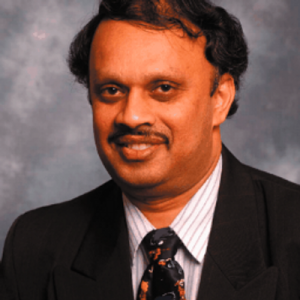
Dr Umesh Prabhu
I’ve been catching up on some of the many “start the new year well” pieces that pop into my various in-boxes, including the simple, but challenging 52 leadership promises for every week of the year from Lolly Daskal. And I have been reflecting on a conversation I had at the tail-end of 2015 with a good Twitter friend, Dr Umesh Prabhu, on the challenges and frustrations we sometimes face getting Board-level leaders to deal with – really deal with – inequality.
Lolly Daskal’s seventh leadership promise is “I promise to accept responsibility and be accountable”; I’ve been thinking what this means for Board members, in relation to equality and diversity and have some key questions.
1: Do I know why equality and diversity matters for my organisation?
I can’t imagine that, if any Board member is asked whether or not equality matters, we will give an answer other than “Of course”. But what about if we’re asked “Why? Why does it matter for your organisation in particular?” How strong is our answer now?
Do I understand the business case, as well as the value-driven case, for focusing on equalities?
Do I know the demographic data of, respectively, the communities within which my organisation operates; the people who use our services and those who should, but do not access them; our staff and volunteers; our Board and other governing bodies? And if there is a mis-match between them, what action plans are in place to ensure better alignment (given that it is well-proven that organisations with staff and leadership that more closely matches the population they intend to serve perform better)?
- Do I understand my own weak areas in equality and diversity?
Any NHS Board member is unlikely to have not signed up to equality and diversity as part of their role. Of course we would. But have we taken the time to explore what our personal attitudes to aspects of equality and diversity may really be, and to understand the implications of this?
For example, a great deal of research has been done on the impact of unconscious bias (which the Equality Challenge Unit defines as “Our brains making incredibly quick judgments and assessments of people and situations without us realising. Our biases are influenced by our background, cultural environment and personal experiences. We may not even be aware of these views and opinions, or be aware of their full impact and implications.”)
Yet I have heard first-hand, and have heard from some (frustrated) equality activists, of Board members who won’t even entertain that they might somehow be susceptible to unconscious bias! This is not only absurd – we are all susceptible to them – but has potential damaging implications for the organisations we lead.
Unconscious bias can affect recruitment decisions, decisions on the activities we prioritise and de-prioritise, and even the services we offer. It can affect how staff are supported, promoted, managed, and disciplined. And it can affect how we engage with those who need our services.
There are ways to test out how unconscious bias may impact on us. As a starter, we can look at the full set of protected characteristics within the Equality Act and think about which we feel better or less informed and comfortable with. Our background, cultural environment and personal experiences will very likely mean we have more experience about some of the protected characteristics than others. And, if this feels too vague or “fluffy” an approach, then we can always take the Harvard bias tests. Whilst these do have an American context, they are a useful way of exploring our unconscious biases in relation to aspects of age, disability, gender, race, religion, and sexuality, among other issues.
- Do I act as an equalities ally?
We are likely to have at least one protected characteristic in which we are outside the group discriminated against. This gives a potentially very powerful opportunity for us to act, in our Board role, as an ally.
A question to ask ourselves is as simple as: “What am I as a* white person/ man/ straight person/ able-bodied person/ person living their birth gender/ younger person, doing to tackle racism/ sexism/ homophobia/ disability discrimination/ transphobia/ ageism?” (* = apply as appropriate!)
There will likely be some protected characteristics that apply to us as individuals. We can reflect on if and how we may operate differently in relation to that issue than to others. Am I a passionate advocate for an issue in which I experience discrimination personally? If so, do I apply that passion to other equality issues? Do I speak out because none of my potential allies choose to?
And we can ask ourselves if we are stronger allies on some issues rather than others.
Do I actively support “champions” from particular protected characteristics? One way in which organisations can help steer equalities work is to recognise people from particular protected characteristics as leaders (or “champions”), helping challenge the way in which the organisation can improve its equalities activity. But we need to take care that such leaders don’t become de facto the sole organisational “owner” of an equality strand. Yes, there might be a disability champion on the Board, but s/he should not be the sole voice on disability, should not be the person always turned to for an answer, nor (as sometimes happens) become regarded as the “expert” across all the protected characteristics.
If we have equality champions, I can ask “What am I doing to work alongside them?” and make sure I have a conversation with them on what being a good ally at the Board would look like.
And I can ask myself whether I am alert to the potential equality impacts of decisions we are taking as a Board. Are appropriate equality impact assessments carried out? Do we understand who is particularly likely to gain from decisions, and any potential negative impact? I don’t need to wait for someone with a personal experience to ask equality questions – I need to take my responsibility for ensuring the questions are asked, and are addressed.
- Do we present as an equalities Board?
An important factor in what Boards look like is, of course, what the diversity around the table is. Roger Kline’s research on “snowy white peaks” in the NHS in London is both a dispiriting reflection on the lack of diversity at board level, and a clarion call for action. There are lessons we can all learn from this, even if our organisation works in communities less diverse than London:
- As and when Board vacancies come up, are we actively promoting our organisation to under-represented communities to enable them to become a member of the Board?
- Are we challenging ourselves on how we ensure diverse experiences inform our decisions, even if those diverse experiences are not held personally by people around the table?
- Do we lead by example? Have we signed up to the Diversity in the Boardroom pledge? Do we ensure our organisation takes on diversity “quality marks” such as Stonewall’s Workplace Equality Index or the Positive about disabled people “two ticks” scheme – and then ensure we act in accordance with the aspirations we’ve committed to? Do we engage with local community equality events such as religious celebrations?
- Are we sighted on our implementation of the NHS Workforce Race Equality Standard?
- Do we ensure people from protected characteristics can effectively engage with us, challenge us, and have an impact on what we do as a Board?
- Am I accepting responsibility for equalities in my organisation?
As a Chair and Non-Executive Director, my responsibility for equalities should be as strong as my responsibilities for good financial management and for ensuring high quality, safe services. To not give equalities such personal scrutiny and commitment diminishes me in my role and in my effectiveness.
I am proud to recommit to taking responsibility and being held accountable for equalities in my Board.
Leave A Comment